 

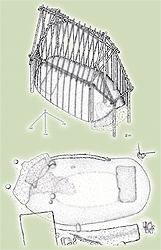
The Neolithic settlement of Nea Makri is situated on the eastern coast of Attica. Excavations (1954, 1977) brought to light remains of the Middle and Late Neolithic, which have special importance, both for the architecture and the pottery of these periods. The survival of architectural remains has facilitated studies in the reconstruction of the dwellings, both of timber-post framed and stone. Earlier huts with walls made of posts had an oval shaped floor, dug 25-30 centimetres deeper than ground level. Their walls consisted of vertically placed wooden beams, on which the four-sided, wooden frame of the gabled roof stood. Around the huts a ditch was dug that prevented water from flooding the interior. Hearths were inside the huts. During the last phases of the settlement the huts were oval shaped, but the perimetric supports of their walls were bent inwards and were affixed to the top of a central post. The door was on the long side of the hut, in order to ensure better lighting and ventilation, while the hearths were outside the houses. |
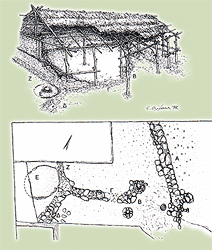
The stone buildings of Nea Makri had stone foundations, 40 centimetres thick and consisted of a long and narrow room, measuring 2,50-3 metres. The entrance was at the short or long side of the buildings and the floors were of beaten and trodden earth, while often they were paved with fine gravel. The roof was flat and slightly sloping and consisted of reeds and hay. The frame work used in the building of the walls is a unique example of the architecture of the Middle Neolithic. Inside the stone foundations, vertical posts were placed, on which horizontal ones were placed , forming thus a structure that would hold mud-bricks together. Cooking took place on outdoor hearths, which were free-standing, either protected by stones in a cyclical arrangement or in a Pi (Π) shape. For the needs of storage, pits with a depth and diameter of 0,5-1 meters were opened and covered with leather, wood, straw mats etc. During the Late Neolithic above ground storehouses were built like small rooms, with stone-paved floors, coated with mud and enclosed by mud-brick walls (branches and clay or mud-bricks). A water well inside the settlement and a stone-paved street are particularly interesting features in the organization of the settlement. Mobiliary finds of the settlement include among others very good quality painted pottery, figurines, food remains with sea-shells among them. |