
|

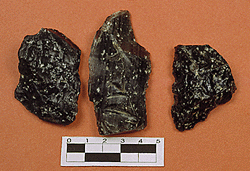
The presence of obsidian on the island was not a motive for an early and permanent human habitation with the purpose of exploiting the volcanic rock. According to archaeological finds the island was inhabited only during the Final Neolithic, probably on a seasonal basis. From the sites (Laimos 1-3) located on the narrow strip of land, that connects the two parts of the island, the site Laimos 2 is the most important. The building remains of the area, and in particular the oval stone building Z3, confirm the area's habitation by a small community. The building consists of two roofed rooms and an open court. The finds indicate that farming (millstones) and animal husbandry were restricted by the natural environment of the island. Exceptionally important for early metallurgy in the Aegean are two clay crucibles for copper melting. |
In the southern part of the site Laimos 2, a cemetery was found that contained 70 graves. They were rectangular, dug in the ground and had the same orientation. Their open section must have been sealed with slate slats, as in modern graves of the cemetery of Kephala on Kea. Only seven skeletons were discovered, while part of the cemetery was entirely destroyed by natural causes. The organization of cemeteries of this type is a characteristic custom of the Final Neolithic. |


