 As the Romans gradually established
themselves in southern Italy at the close of Many a Hellenic artist settled in Rome and elsewhere
in Italy, working in copy shops and on the
decoration of temples and other buildings. One example
is Timarchides and his sons Polycles and Dionysus, and his brother
Timocles. Pasiteles of southern Italy set up shop in Rome at the start
of
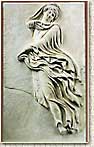
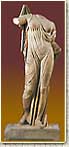
On Hellenic soil, the great copying centre, mainly for the Western market, was Athens. 'Neo-Attic work' was the name given to an entire, distinct category of relief plaques and marble vessels with subjects inspired by pieces standing in the Agora, on the Acropolis, and in major temples. Famous Neo-Attic sculptors included Salpion, Sosibios, and Pontios. The Piraeus reliefs are some of the most typical Neo-Attic ensembles. Numerous copying centres also flourished in Rhodes and cities in Asia Minor, including Ephesos, Tralles, Magnesia-on-the-Meander, Pergamum, and Aphrodisias. |