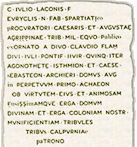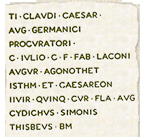
The equestrian order (ordo equester) was larger than the senatorial order, numbering twenty thousand even in Augustus' reign. This number increased through the first two centuries of the imperial age, owing to the growing influx of provincial subjects into the order in question. Membership of the equestrian order was not necessarily hereditary: there were cases of the son of an equestrian not holding the same rank. In certain equestrian families, consequently, they were unable, unlike the senatorials, to sustain their membership across several generations. Their male descendants might, however, rise to the senatorial order.
The social composition of the equestrian order was heterogeneous. It included members of humble origin, as well as some who had come from the freedmen. Economic condition, links forged with powerful Romans, and military service in person were the three basic factors playing a role in beoming a member.
Unlike the senatorial order, the |