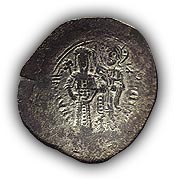
 Alexios II. Due to the minority of the young emperor, the regency was assumed by his mother Maria. In reality, however, power was exercised by the protosebastos, Alexios Komnenos, who was particularly hostile to the people. The laxity of the state during his rule gave the Hungarians the opportunity to move against him in 1181 and to occupy the regions of Dalmatia, Croatia and Sirmium.
 The Byzantine state was in need of a powerful leader in order to confront internal and external perils. The cousin of the Emperor, Manuel Andronikos, was considered by many the most suitable man to assume power. In 1182 he did away with all the Westerners in Constantinople that Manuel I and the regency had favoured. Next, he ousted his opponents from the regency, crowned himself co-emperor and after having the young Alexios strangled, was left sole ruler (1183).
As a man with a turbulent life and career behind him, Andronikos I is one of the most interesting figures in Byzantine history. His love affairs were a topic of discussion in the Byzantine court, while his valiance and courage on the field of the battle were evidence of a man powerful and able enough to assume supreme authority. His policy was directed by his antipathy for the big landowners and the western-like attitude of the regency. He took steps towards relief of the people of the Empire; but the violent way in which he imposed his policy resulted in its failure and his own, horrible death.